IN HIS ground-breaking book, Annihilation of Caste, Dr. B.R. Ambedkar diagnosed the caste-problem as being fundamentally religious in nature and proposed the only cure to be a rejection of the Shastras or Hindu scriptures; for, he observed, "the acts of the people are merely the results of their beliefs inculcated in their minds by the Shastras, and that people will not change their conduct until they cease to believe in the sanctity of the Shastras on which their conduct is founded." He proposed inter-caste marriages and inter-caste dinners as a plan of action; but, in response to Gandhi's response to have a rational approach to the Shastras and reject only interpolations rather than reject them altogether, he replied that the "masses do not make any distinction between texts which are genuine and texts which are interpolations. The masses do not know what the texts are. They are too illiterate to know the contents of the Shastras. They have believed what they have been told, and what they have been told is that the Shastras do enjoin as a religious duty the observance of Caste and Untouchability." Towards the end of his indictment, Ambedkar begins to hint at a deeper problem than that of the Shastras:
For one honest Brahmin preaching against Caste and Shastras because his practical instinct and moral conscience cannot support a conviction in them, there are hundreds who break Caste [[e.g. when a Brahmin sells shoes instead of practicing priesthood]] and trample upon the Shastras every day, but who are the most fanatic upholders of the theory of Caste and the sanctity of the Shastras. Why this duplicity? Because they feel that if the masses are emancipated from the yoke of Caste, they would be a menace to the power and prestige of the Brahmins as a class. The dishonesty of this intellectual class, who would deny the masses the fruits of their [=the Brahmins'] thinking, is a most disgraceful phenomenon. [Text in double parenthesis, mine]
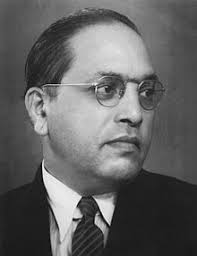 Ambedkar had noted that there are intellectual Brahmins who do not care for the Shastras but care much for caste. In other words, he had in a way acknowledged that the rejection of Shastras is the not real solution. Already in the discourse, he had noted that "Caste is no doubt primarily the breath of the Hindus. But the Hindus have fouled the air all over, and everybody is infected—Sikh, Muslim, and Christian." Was he referring to the permeation of casteism into Sikhism, Islam, and Christianity in India? If so, as is also the fact, the very phenomenon invalidates the argument that rejection of Shastras is the cure for caste-communalism. The Sikhs, the Muslims, and the Christians do not accept the Shastras.* Then, how is it that casteism holds a grip on many of them?
Though Ambedkar had tried to show in the treatise that castes among Sikhs, Muslims, and Christians is different from that which is found among Hindus, modern facts show that, on the contrary, the caste-system, regardless of religion, has permeated even these faith-groups. In fact, for a long time there have been movements among Christians that sought emancipation through various expressions in what is studied in Seminaries as dalit theologies. The question is raised whether identification with caste is a class problem or a religious problem. It is notable that converts from the different castes of the Hindu-fold continued to carry forward their caste-identities. See the following entries:
Caste System Among South Asian Muslims
Caste System Among Indian Christians
Caste System Among Sikhs in Punjab
Though "untouchability" is not always very obvious, casteism plays a big role in issues of marriage and association. In fact, there are, sadly, some "Christian" denominations in South India that are heavily caste-oriented. The author has personally heard of cases where some "upper caste Christians" wouldn't partake of the Lord's Communion because it was being administered by a Pastor who they regarded as being a "low caste". How repugnant?
Ambedkar had noted it well that it is easier for some "saints" to preach the equality of men in the eyes of God. There were examples of such preachers in the history of Hinduism. Ambedkar noted: "They did not preach that all men were equal. They preached that all men were equal in the eyes of God—a very different and a very innocuous proposition, which nobody can find difficult to preach or dangerous to believe in."
Utilitarianism is the king. Mammon or worldliness bears the scepter over these men who make adulterous liaisons with the devil for the sake of earthly profit. They sell their faith for a pot of pottage and betray their Lord for 30 pieces of silver. They would secretly create false certificates and adopt false surnames of the lower caste in order to avail of jobs or privileges reserved for the latter. Then, they would proudly bear about their ancestral surnames and rejoice in their being a special species of men. How corrupt! How corrupt still that the abomination is placed in the Holy of Holies!
Is there a cure? Of course, there is: Repentance! Men are only slaves to what they submit to in their mind. Nothing can enslave them. Casteism is not just a social problem. It is SIN! It is the most irrational and superstitious concept to ever occur to human mind and the most self-dividing and self-destroying notion. Religion IS NOT THE ANSWER. If it was, why are there still castes among different religions. Why was there the division between nobility and the common man in the West? Why was there such persecution against the freedom of conscience?
God calls humans to repent of their sins against their fellow men. And, unless they are willing to treat their neighbors as themselves, they have no place in the Kingdom of God.
See Also:
The Origin of the Four Castes According to Manu
* Though it is an undeniable fact that casteism has its theoretical basis in the Vedas and the Hindu scriptures, including the Manusmriti, while converts to other faiths try to retain their caste-status in opposition to the doctrinal basis of their faith. For instance, when a Christian practices caste discrimination, his practice is not in conformity to the teachings of the Bible. However, for a Hindu to observe caste is not in any way a contradiction of the teachings of the Shashtras. [Sat 5 Aug 2017]
 The draft of the Jharkhand Freedom of Religion Bill 2017 has been approved by the Raghubar Das Cabinet.1. The Bill prohibits religious conversion by means of force or allurement. It states:
No person shall convert to attempt to convert, either directly or otherwise, any person from one religion/ religious faith to another by the use of force or by allurement or by any fraudulent means, nor shall any person abet any such conversion.
The Bill further prescribes that any religious conversion must only follow prior permission from the District Magistrate:
(1) Whoever converts any person from one religion/religious faith to another, either by performing any ceremony by himself for such conversion as a religious priest or takes part directly or indirectly in such ceremony shall take prior permission for such proposed conversion from the District Magistrate concerned by applying in such form as may be prescribed by rules.
(2) The person who is converted shall send intimation to the District Magistrate of the District concerned in which the ceremony has taken place of the fact of such conversion within such period and in such form as may be prescribed by rules.
(3) Whoever fails without sufficient cause, to comply with the provisions of sub-section (1) and (2) shall be punished with imprisonment for a term which may extend to one year or with fine which may extend to rupees five thousand or with both.
The Evangelical Fellowship of India responded immediately:
We note that similar laws already exist in the states of Arunachal Pradesh, Orissa, Madhya Pradesh, Chhattisgarh, Himachal Pradesh and Gujarat. They were made in Rajasthan, and were made and withdrawn in Tamil Nadu.
Although such laws existed in some Hindu principalities in colonial India in early 20th Century, since Independence, the Union or state government have not been able to define the terms inducement, coercion, force or fraud in the context of religion. The Government and in fact the Supreme Court have not given a definitive definition of the term ‘religion’ specially when it relates to faiths other than Islam, Christianity, Sikhism, or Buddhism and also has not yet explained, after 70 years of being a Republic, indigenous faith and belief systems of hundreds, if not thousands of small communities across the country, and especially in what are called tribal areas, are not listed separately but are lumped together under the majority religion.
The government has also not been able to adduce any proof or evidence over half a century of aggressive implementation of such laws, of any forcible conversions by Christians against whom such laws are essentially targeted. There are hardly any convictions in courts to sustain police and political allegations of forcible and fraudulent conversions. As a matter of fact, the Himachal Pradesh High Court, a few years ago, struck down efforts by the government to force prior approval, after the Evangelical Fellowship of India moved a petition along with other parties.2
Religious conversion is a burning issue in India. During the Independence Movement, Dr. B.R. Ambedkar, had concluded that there was no dignity for the depressed classes as long as they identified themselves with the Hindu caste religion. He converted to Buddhism. He strongly opposed Gandhi's decry of religious conversions of the depressed classes. Gandhi regarded the "Harijan" (a term he coined) as not possessing the calibre for freedom of religious decision. Ambedkar opposed that. The concern of most leaders has been that the masses are incapable of decision making in matters of religion. However, these political leaders were elected by exercise of the freedom of decision by the same masses. Or was it that lure and force were used to conjure votes? Why not pass a Political Freedom Bill that requires any citizen voting for a political party to obtain prior permission from the Magistrate? Of course, this is unimaginable. The idea of prior permission is antithetical to the idea of freedom. Of course, these laws will not prevent citizens from exercising religious freedom. Religious conversions will continue to occur though many may not find it necessary to report their matters of conscience to the state.
One thing is positive about such laws, however. They prove that religious conversions that take place in spite of such laws cannot be called as inauthentic and false anymore. Faith conversion (a better word) cannot be challenged when one has genuine grounds for his/her personal belief.
See Also
Anti-Conversion Laws In India
NOTES
1 Jharkhand Cabinet Clears Anti-Conversion Bill, Indian Express, Aug 2, 2017.
2Jharkhand Bill Ignores Himachal Lesson - (Download Bill copy)