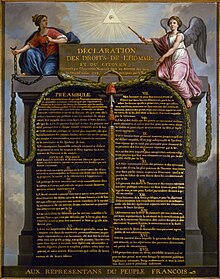
Today, we celebrate once again the fact of India becoming a sovereign nation, free from the rule of the British Monarchy. Colorful decors, hoisted flags, patriotic songs, happy children will flood schools, streets, and stadiums.
We celebrate our political freedom today. But, we are not blind to the sight of oppressed and marginalized fellow citizens. We are not deaf to the cries of orphans and widows. The nation still bleeds and groans in agony from bruises of internal hurts. The external chains have fallen. But, there are wars within.
Social evils, terrorism, naxalism, false gurus, evil rackets, kidnappings, rapes, murders, employee injustice, abuse, drunkenness, thefts, crowd fury, human trafficking, educational corruption, bureaucratic corruption, bribery, cheating, faking, lying, infidelity, forgery, drug abuse, unnatural acts fill the content of daily newspapers. They paint a sad, dismal picture of the nation.
But, there are several groups and organizations that are fighting against these evils. Some of them have achieved tremendous success. They have helped women, children, and men find justice and dignity in the world. On this Independence Day, we laud their combined efforts.
There have also been millions of alert and responsible citizens who have been alert and have helped rescue children, women, men from dangers, from trafficking, from exploitation. Some of them may not have done very big heroic deeds. They only have been cautious to keep our environment clean, to not litter, to not cause pollution. These simple deeds have contributed to the infinity of drops that have made the ocean of goodness in our nation resplendent as the morning sun. We appreciate and honor them on this day!
We laud every gesture of kindness, every eye of mercy, every helping hand, every act of goodness, every labor to excel in that which is noble and philanthropic. We laud every voice of gentleness, every demeanor of politeness, feet that have gone the extra mile to do others good.
We praise those who have borne pain with strength and refused to return evil for evil, who have chosen to put an end to evil by bearing its scourges on their backs. They are the true heroes of our nation.
We celebrate the Independence of the truly independent Indian!
Happy Independence Day!
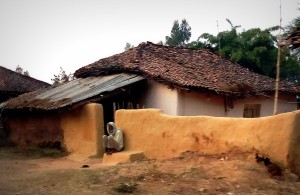
IN HIS ground-breaking book, Annihilation of Caste, Dr. B.R. Ambedkar diagnosed the caste-problem as being fundamentally religious in nature and proposed the only cure to be a rejection of the Shastras or Hindu scriptures; for, he observed, "the acts of the people are merely the results of their beliefs inculcated in their minds by the Shastras, and that people will not change their conduct until they cease to believe in the sanctity of the Shastras on which their conduct is founded." He proposed inter-caste marriages and inter-caste dinners as a plan of action; but, in response to Gandhi's response to have a rational approach to the Shastras and reject only interpolations rather than reject them altogether, he replied that the "masses do not make any distinction between texts which are genuine and texts which are interpolations. The masses do not know what the texts are. They are too illiterate to know the contents of the Shastras. They have believed what they have been told, and what they have been told is that the Shastras do enjoin as a religious duty the observance of Caste and Untouchability." Towards the end of his indictment, Ambedkar begins to hint at a deeper problem than that of the Shastras:
For one honest Brahmin preaching against Caste and Shastras because his practical instinct and moral conscience cannot support a conviction in them, there are hundreds who break Caste [[e.g. when a Brahmin sells shoes instead of practicing priesthood]] and trample upon the Shastras every day, but who are the most fanatic upholders of the theory of Caste and the sanctity of the Shastras. Why this duplicity? Because they feel that if the masses are emancipated from the yoke of Caste, they would be a menace to the power and prestige of the Brahmins as a class. The dishonesty of this intellectual class, who would deny the masses the fruits of their [=the Brahmins'] thinking, is a most disgraceful phenomenon. [Text in double parenthesis, mine]
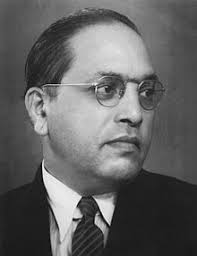 Ambedkar had noted that there are intellectual Brahmins who do not care for the Shastras but care much for caste. In other words, he had in a way acknowledged that the rejection of Shastras is the not real solution. Already in the discourse, he had noted that "Caste is no doubt primarily the breath of the Hindus. But the Hindus have fouled the air all over, and everybody is infected—Sikh, Muslim, and Christian." Was he referring to the permeation of casteism into Sikhism, Islam, and Christianity in India? If so, as is also the fact, the very phenomenon invalidates the argument that rejection of Shastras is the cure for caste-communalism. The Sikhs, the Muslims, and the Christians do not accept the Shastras.* Then, how is it that casteism holds a grip on many of them?
Though Ambedkar had tried to show in the treatise that castes among Sikhs, Muslims, and Christians is different from that which is found among Hindus, modern facts show that, on the contrary, the caste-system, regardless of religion, has permeated even these faith-groups. In fact, for a long time there have been movements among Christians that sought emancipation through various expressions in what is studied in Seminaries as dalit theologies. The question is raised whether identification with caste is a class problem or a religious problem. It is notable that converts from the different castes of the Hindu-fold continued to carry forward their caste-identities. See the following entries:
Caste System Among South Asian Muslims
Caste System Among Indian Christians
Caste System Among Sikhs in Punjab
Though "untouchability" is not always very obvious, casteism plays a big role in issues of marriage and association. In fact, there are, sadly, some "Christian" denominations in South India that are heavily caste-oriented. The author has personally heard of cases where some "upper caste Christians" wouldn't partake of the Lord's Communion because it was being administered by a Pastor who they regarded as being a "low caste". How repugnant?
Ambedkar had noted it well that it is easier for some "saints" to preach the equality of men in the eyes of God. There were examples of such preachers in the history of Hinduism. Ambedkar noted: "They did not preach that all men were equal. They preached that all men were equal in the eyes of God—a very different and a very innocuous proposition, which nobody can find difficult to preach or dangerous to believe in."
Utilitarianism is the king. Mammon or worldliness bears the scepter over these men who make adulterous liaisons with the devil for the sake of earthly profit. They sell their faith for a pot of pottage and betray their Lord for 30 pieces of silver. They would secretly create false certificates and adopt false surnames of the lower caste in order to avail of jobs or privileges reserved for the latter. Then, they would proudly bear about their ancestral surnames and rejoice in their being a special species of men. How corrupt! How corrupt still that the abomination is placed in the Holy of Holies!
Is there a cure? Of course, there is: Repentance! Men are only slaves to what they submit to in their mind. Nothing can enslave them. Casteism is not just a social problem. It is SIN! It is the most irrational and superstitious concept to ever occur to human mind and the most self-dividing and self-destroying notion. Religion IS NOT THE ANSWER. If it was, why are there still castes among different religions. Why was there the division between nobility and the common man in the West? Why was there such persecution against the freedom of conscience?
God calls humans to repent of their sins against their fellow men. And, unless they are willing to treat their neighbors as themselves, they have no place in the Kingdom of God.
See Also:
The Origin of the Four Castes According to Manu
* Though it is an undeniable fact that casteism has its theoretical basis in the Vedas and the Hindu scriptures, including the Manusmriti, while converts to other faiths try to retain their caste-status in opposition to the doctrinal basis of their faith. For instance, when a Christian practices caste discrimination, his practice is not in conformity to the teachings of the Bible. However, for a Hindu to observe caste is not in any way a contradiction of the teachings of the Shashtras. [Sat 5 Aug 2017]
 The draft of the Jharkhand Freedom of Religion Bill 2017 has been approved by the Raghubar Das Cabinet.1. The Bill prohibits religious conversion by means of force or allurement. It states:
No person shall convert to attempt to convert, either directly or otherwise, any person from one religion/ religious faith to another by the use of force or by allurement or by any fraudulent means, nor shall any person abet any such conversion.
The Bill further prescribes that any religious conversion must only follow prior permission from the District Magistrate:
(1) Whoever converts any person from one religion/religious faith to another, either by performing any ceremony by himself for such conversion as a religious priest or takes part directly or indirectly in such ceremony shall take prior permission for such proposed conversion from the District Magistrate concerned by applying in such form as may be prescribed by rules.
(2) The person who is converted shall send intimation to the District Magistrate of the District concerned in which the ceremony has taken place of the fact of such conversion within such period and in such form as may be prescribed by rules.
(3) Whoever fails without sufficient cause, to comply with the provisions of sub-section (1) and (2) shall be punished with imprisonment for a term which may extend to one year or with fine which may extend to rupees five thousand or with both.
The Evangelical Fellowship of India responded immediately:
We note that similar laws already exist in the states of Arunachal Pradesh, Orissa, Madhya Pradesh, Chhattisgarh, Himachal Pradesh and Gujarat. They were made in Rajasthan, and were made and withdrawn in Tamil Nadu.
Although such laws existed in some Hindu principalities in colonial India in early 20th Century, since Independence, the Union or state government have not been able to define the terms inducement, coercion, force or fraud in the context of religion. The Government and in fact the Supreme Court have not given a definitive definition of the term ‘religion’ specially when it relates to faiths other than Islam, Christianity, Sikhism, or Buddhism and also has not yet explained, after 70 years of being a Republic, indigenous faith and belief systems of hundreds, if not thousands of small communities across the country, and especially in what are called tribal areas, are not listed separately but are lumped together under the majority religion.
The government has also not been able to adduce any proof or evidence over half a century of aggressive implementation of such laws, of any forcible conversions by Christians against whom such laws are essentially targeted. There are hardly any convictions in courts to sustain police and political allegations of forcible and fraudulent conversions. As a matter of fact, the Himachal Pradesh High Court, a few years ago, struck down efforts by the government to force prior approval, after the Evangelical Fellowship of India moved a petition along with other parties.2
Religious conversion is a burning issue in India. During the Independence Movement, Dr. B.R. Ambedkar, had concluded that there was no dignity for the depressed classes as long as they identified themselves with the Hindu caste religion. He converted to Buddhism. He strongly opposed Gandhi's decry of religious conversions of the depressed classes. Gandhi regarded the "Harijan" (a term he coined) as not possessing the calibre for freedom of religious decision. Ambedkar opposed that. The concern of most leaders has been that the masses are incapable of decision making in matters of religion. However, these political leaders were elected by exercise of the freedom of decision by the same masses. Or was it that lure and force were used to conjure votes? Why not pass a Political Freedom Bill that requires any citizen voting for a political party to obtain prior permission from the Magistrate? Of course, this is unimaginable. The idea of prior permission is antithetical to the idea of freedom. Of course, these laws will not prevent citizens from exercising religious freedom. Religious conversions will continue to occur though many may not find it necessary to report their matters of conscience to the state.
One thing is positive about such laws, however. They prove that religious conversions that take place in spite of such laws cannot be called as inauthentic and false anymore. Faith conversion (a better word) cannot be challenged when one has genuine grounds for his/her personal belief.
See Also
Anti-Conversion Laws In India
NOTES
1 Jharkhand Cabinet Clears Anti-Conversion Bill, Indian Express, Aug 2, 2017.
2Jharkhand Bill Ignores Himachal Lesson - (Download Bill copy)
From Marbaniang, Domenic. Secularism In India: A Historical Analysis (2009).
THERE WERE bills and acts in relation to religious conversion even before the independence. Instances are the Raigarh State Conversion Act of 1936 and the Udaipur State Conversion Act of 1946. These laws aimed at eliminating the rural and tribal rights of freedom to conscience and religion.[1] After independence, there have been at least five states (Madhya Pradesh, Orissa, Arunachal Pradesh, Tamil Nadu, and Gujarat) that have enacted laws to either curtail or cease conversions. The following section is an account of the Freedom of Religion Acts enacted by States of Orissa, Madhya Pradesh, Arunachal Pradesh, Tamil Nadu, and Gujarat to check the tide of religious conversions and problems arising from it. The Gujarat Law and parliamentary affairs minister Ashok Bhatt, recently, has referred to these laws as anti-conversion laws.[2]
- The Madhya Pradesh Freedom of Religion Act of 1968
 This anti-conversion law was enacted in face of allegations that the Christian Missionaries were using lure and force for religious conversions. In 1954, the Niyogi Committee set up by the Congress government in Madhya Pradesh accused Christian missionaries of creating ‘a state within a state’ and observed that the ‘philanthropic activities of Christian missionaries are a mask for proselytization.’[3] The Sangh Parivar also alleged that the missionaries were promoting political dissent in the State.[4]
The Madhya Pradesh Assembly rejected the Freedom of Religion Bills of 1958 and 1963. However, this bill was passed in 1968 as ‘The Freedom of Religion Act.’[5]
The Madhya Pradesh ‘Freedom of Religion Act’ requires that a convert produce a legal affidavit that s/he was not under any pressure, force, or allurement to convert but was converting by own will and desire after evaluating the religion properly.[6] Also according to this law, anyone who writes or speaks or sings of ‘divine displeasure’ (with an intention to induce forced conversion by means of threat) can be imprisoned for a period of up to two years and fined up to five thousand rupees.[7]
Evidently, this law is an open violation of the right to freedom of religion that includes the freedom to propagate one’s religion. What is ‘divine displeasure’ in one religion may not be ‘divine displeasure’ in another religion. However, without propagation of religion, this cannot be known to a person belonging to another religion. Moreover, if there is no propagation of such fundamentals of religion, which distinguish one religion from the other, then there can be no conversions. Therefore, a law prohibiting the preaching of a fundamental tenet such as ‘divine displeasure’ is an attempt to prevent the citizen from a proper exercise of his/her right to freedom of religion.
- The Orissa Freedom of Religions Act of 1968
 The state of Orissa enacted the Orissa Freedom of Religions Act in 1968. It stated that “no person shall convert or attempt to convert either directly or otherwise any person from one religious faith to another by the use of force or by inducement or by any fraudulent means nor shall any person abet any such conversion.”[8] Contravention of this law was punishable with imprisonment of up to one year and/or a fine of up to Rs 5,000. In the case of a minor, a woman, or a person belonging to a Scheduled Caste or Tribe, the punishment was up to two years of imprisonment and the limit of the fine raised to Rs. 10,000.[9]
The Orissa High Court, however, struck down the Act as ultra vires of the Constitution[10] on the ground that the state legislature did not have the right to legislate matters of religion.[11] The same year, the state of Madhya Pradesh also enacted the Madhya Pradesh Freedom of Religion Act as seen above. However, the Madhya Pradesh High Court, in contrary to the Orissa High Court, negated the challenge of some Christians that the Act violated their fundamental right as provided under Article 25 of the Constitution. The decisions of both the Courts were challenged before the Supreme Court. The Supreme Court upheld the decision of the Madhya Pradesh High Court and reversed the decision of the Orissa High Court.[12] The Supreme Court ruling by a full bench said:
We find no justification for the view that Article 25 granted a fundamental right to convert persons to one’s own religion. It has to be appreciated that the freedom of religion enshrined in the Article is not guaranteed of one religion only, but covers all religions alike and it can be properly enjoyed by a person if he exercises his right in a manner commensurate with the like freedom of persons following other religions.
What is freedom for one is freedom for others, in equal measure; and there can be no such thing as a fundamental right to convert any person to one’s own religion.[13]
Ruma Pal notes that this decision of the Supreme Court has been justifiably criticized for its failure in distinguishing between conversion by force and conversion by persuasion.[14] Even advertisements make use of the art of persuasion. The right of freedom to choose one’s own religion has no meaning if the very means of choice were removed. Choice between religions is unthinkable in the absence of an intellectually persuasive propagation of religion. Thus, the Supreme Court’s ruling that disregards the fundamental right to freedom of propagating one’s own religion is unjustifiable. As H.M. Seervai notes:
Art. 25(1) confers freedom of religion—a freedom not limited to the religion in which a person is born. Freedom of conscience harmonizes with this, for its presence in Art. 25(1) shows that our Constitution has adopted a “system which allows free choice of religion.” The right to propagate religion gives a meaning to freedom of choice, for choice involves not only knowledge but an act of will. A person cannot choose if he does not know what choices are open to him. To propagate religion is not to impart knowledge and to spread it more widely, but to produce intellectual and moral conviction leading to action, namely, the adoption of that religion.[15]
Thus, the Orissa Freedom of Religions Act of 1968 cannot at all be considered a Freedom of Religions Act since it takes away the very means of freedom to choose and practice one’s own religion.
- The Arunachal Pradesh Freedom of Religion Act of 1978
 This Act was enacted to prevent the tribals of Arunachal Pradesh from converting to other religions. It reads:
3) Prohibition of forcible conversion.
No person shall convert or attempt to convert, either directly or otherwise any person from indigenous faith by use of force or by inducement or any fraudulent means nor shall any person abet any such conversion.
4) Punishment of Contravention of the Provision of Section.
Any person contravening the provisions contained in Section 2, shall without prejudice to any civil liability, be punishable with imprisonment to the extent of two (2) years and fine up to ten thousand (10, 000) rupees. (i) whoever converts any person from his indigenous faith to any other faith or religion either by himself performing the ceremony for such conversion as a religious priest or by taking part directly in such ceremony shall, within such period after the ceremony as may be prescribed, send an intimation to the Deputy Commissioner of the District to which the person converted belongs, of the fact of such conversion in such forms as may be prescribed.[16]
Evidently, the meanings given to the word ‘inducement,’ namely ‘the offer of any gift, or gratification, either cash or in kind and also include grant of any benefit, either pecuniary or otherwise,’ in the law can dangerously affect social work by religious groups, even though their intentions are charity-oriented. Such ambiguity within the law is a clear indication of the State’s intention to restrain individuals from using their right to freedom of religion.
- The Tamil Nadu Anti-Conversion Act of 2002.
 The Tamil Nadu Anti-conversion Act of 2002 stated that ‘No person shall convert or attempt to convert directly or otherwise any person from one religion to another either by use of force or by allurement or by any fraudulent means.’[17] The immediate provocation for this Act, supposedly, ‘was the threat of hundreds of Dalits of Koothirambakkam village, near Kancheepuram, to change religion because their decades-old demand that their right to enter and worship at the common village temple be protected by the government had not been conceded.’[18]
There had been great protest against this ordinance from various corners. Police arrested 10 people who were planning a mass conversion on December 6, 2002 in protest to the new anti-conversion law. About 3,000 Dalits were to be converted to Christianity and Buddhism, without applying to the local magistrate to approve their conversion in accordance to the new law, on this day according to this plan.[19] Apparently, the Dalits saw this law as violating their fundamental rights and also ridding them of the opportunity to rise. However, President of the Maharashtra branch of the Vishwa Hindu Parishad (VHP), Ashok Chowgule, congratulated the Tamil Nadu government on the ordinance. He said conversions cause social tensions.[20] The State Council of the All-India Democratic Women's Association also opposed the bill as being unjustified and opposed to the rights of minorities and Dalits ensured in the Constitution.[21]
On May 7 2004, the Prohibition of Conversion Act Protest Committee appealed to the electorate to vote for the Dravida Munnetra Kazhagam-led Democratic Progressive Alliance (DPA). The DMK was said to have in its manifesto a promise to repeal the Anti-conversion law.[22] However, soon after the defeat of the BJP led coalition in the 2004 elections, the Tamil Nadu Government led by Jayalalitha repealed the law in June to the chagrin of many Hindu Fundamentalists and Nationalists.[23]
- The Gujarat Freedom of Religion Act.
 Soon after its victory in Gujarat the Narendra Modi government decided to accord "top priority" to the commitment given in the BJP poll manifesto and enact a law against religious conversions in the state.[24] Accordingly, the Gujarat Assembly passed the Freedom of Religion Act in March 2003.[25] It was called the Dharam Swatantrata Vidheya[26] (Freedom of Religion Act). Narendra Modi called the Act as one of the main ‘achievements’ of his government’s one year in office.[27] Evidently, anti-conversion law is a significant part of BJP agenda. The law prohibited conversion by force or inducement.[28]
All the above anti-conversion laws violate the Constitutional provision of fundamental rights to the citizens of India. Thus, it has been seen that the various anti-conversion laws are a direct contravention of the provisions given in the Constitution.
Also, the opposition of conversion is, evidently, an attempt to destroy the citizen’s right to freedom of religion and desecularize Indian society. Though it is known that this attempt is futile in this globally connected world of information explosion, yet many of the Sangh activists are actively busy in trying to stop conversions, reconvert non-Hindus to Hinduism, and make India a Hindu nation. Back in 2002, L.K. Advani, the then Deputy Prime Minister of India, told the parliament that ‘India can never be turned into a Hindu nation.’[29]
True to Advani’s statement, India can never be turned into a Hindu nation because of the educational, economical, social, and political foundation that the British and the early leaders of Independent India laid.
NOTES
[1] Ebe Sunder Raj, The Confusion Called Conversion, p. 140.
[2] ‘Anti-conversion Laws Yet To be Framed,’ The Times of India, Nov. 7, 2004, Ahmedabad.
[3] Subhash Agarwal, ‘Law, Order, & Religious Conversions’, The Financial Express, Sept. 25, 2003.
[4] Hansel D’Souza, ‘Christians Awake! The Secular Citizen’, June 1995, http://www.hvk.org/Publications/cihp/an1.html
[5] Ebe Sunder Raj, The Confusion Called Conversion, p. 140.
[6] Ibid, p. 146 & R. Domenic Savio, ‘A Descriptive Study of Prarthana Bhavan, Sanjay Koyala Nagar’, (unpublished M.A. Thesis, Acts Academy of Higher Education, 2004), p. 81.
[7] Ebe Sunder Raj, The Confusion Called Conversion, p. 142.
[8] Section 3 of the Orissa Freedom of Religions Act, 1968. As cited by Ruma Pal, ‘Religious Minorities and the Law’, Religion and Personal Law in Secular India (Bloomington: Indiana University Press, 2001), http://iupress.indiana.edu/textnet/0-253-33990-1/0253108683.htm
[9] Ibid.
[10] Ebe Sunder Raj, The Confusion Called Conversion, p. 140.
[11] Ruma Pal, ‘Religious Minorities and the Law’, op. cit.
[12] Ibid.
[13] Ebe Sunder Raj, The Confusion Called Conversion, p. 140.
[14] Ruma Pal, ‘Religious Minorities and the Law’, op. cit.
[15] As cited by Ruma Pal, op. cit.
[16] Ebe Sunder Raj, The Confusion Called Conversion, pp. 141-2.
[17] ‘Anti-conversion Ordinance Decried’, The Times of India, Nov. 6. 2004, http://www1.timesofindia.indiatimes.com/cms.dll/articleshow?artid=2469800
[18] Frontline, Dec.3, 2004, p.10.
[19] ‘Crackdown Over India Mass Baptism’, BBC News, South Asia, Friday, 6 December, 2002, 04:56 GMT .
[20] ‘Anti-conversion Ordinance Decried’, The Times of India, Nov. 6. 2004.
[21] ‘Anti-conversion Bill unjustified: AIDWA’, The Hindu, Nov. 12, 2002. http://www.hinduonnet.com/2002/11/12/stories/2002111204290500.htm
[22] http://www.hindu.com/2004/05/08/stories/2004050803510400.htm
[23] http://www.hindu.com/2004/06/09/stories/2004060905050500.htm
[24] http://paknews.com/PrintPage.php?id=1&date1=2003-01-11&news2=main1
[25] http://timesofindia.indiatimes.com/articleshow/382992.cms
[26] BBC News, Tuesday, 25 February, 2003, 17:25 GMT, http://news.bbc.co.uk/2/hi/south_asia/2798771.stm
[27] http://timesofindia.indiatimes.com/articleshow/382992.cms
[28] http://paknews.com/PrintPage.php?id=1&date1=2003-01-11&news2=main1
[29] BBC News, 5 December, 2002, 19:08 GMT, http://news.bbc.co.uk/1/hi/world/south_asia/2546023.stm